6 Best AI Video Editors in September 2026
Not every AI video editor is going after the same problem. Some are built for transcript-driven edits, some for generating content from scratch, and some for creators who just want quick social formats. Knowing which category each tool lives in saves you a lot of trial and error, so let's walk through the strongest contenders this year.
 Cardboard Team9 min read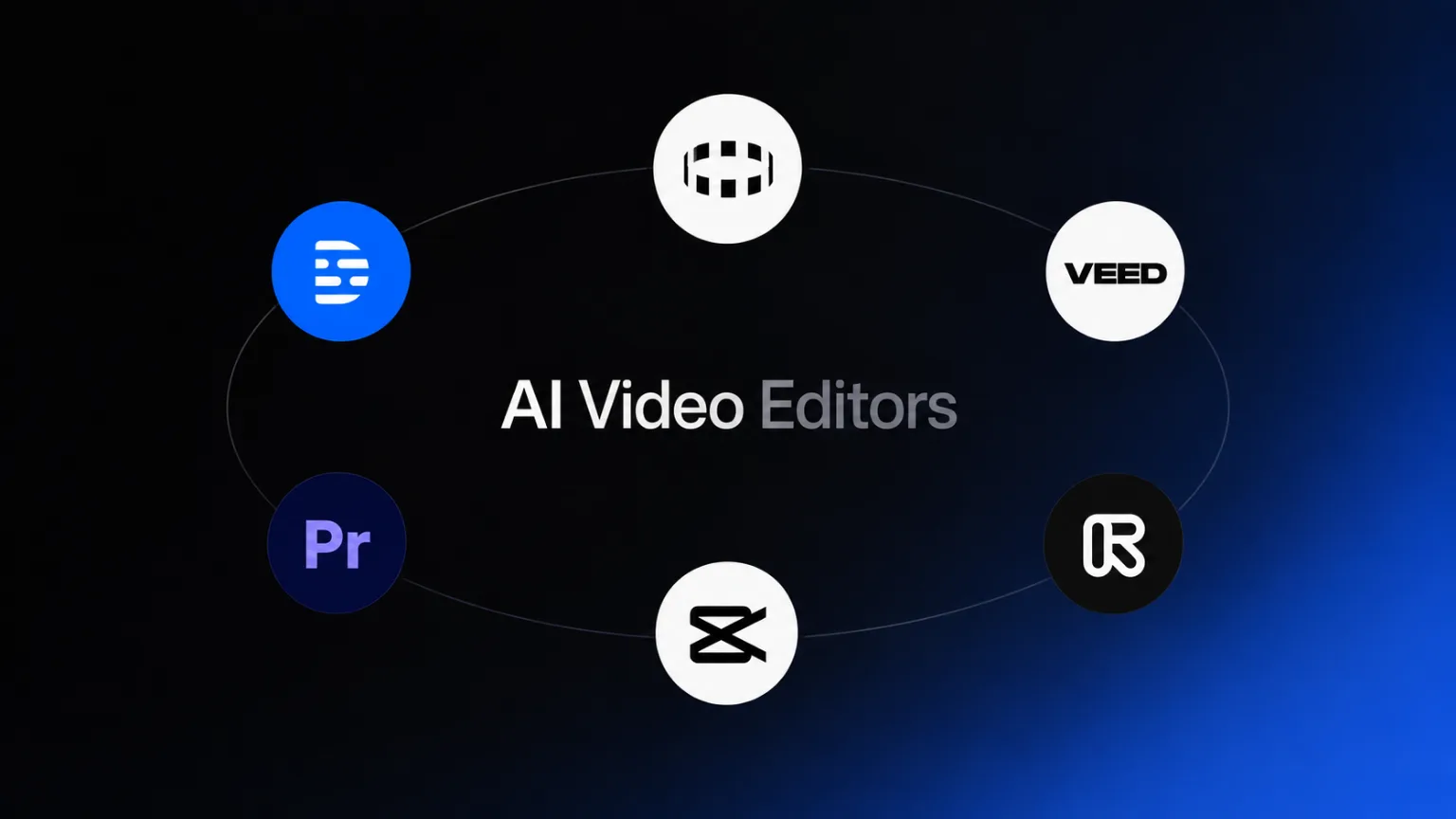
Contents7 sections
TLDR:
- AI video editors replace manual scrubbing with auto-cuts, reframing, and captions from raw footage
- No tool on this list combines agentic editing, semantic footage search, and real-time collaboration except one
- CapCut and VEED cap AI credits annually, making them unreliable for teams shipping video consistently
- Runway is built for generative video creation, not editing camera-captured footage
- Cardboard is a browser-based agentic editor starting at $40/month with 4K export and XML handoff to Premiere, DaVinci, and FCP
What Is an AI Video Editor?
AI video editors shift the work away from manual execution. Instead of scrubbing through footage and making every cut by hand, you describe what you want and the software handles the tedious parts. Auto-captions, background noise removal, smart reframing for different aspect ratios, and rough first cuts from raw footage can all happen automatically. The global AI video market was valued at $4.6 billion in 2025 and is projected to reach $42.3 billion by 2033, reflecting how fast teams are moving toward AI-assisted production.
Older software like Premiere Pro or DaVinci Resolve gives you a powerful set of instruments, but someone still has to play them. AI editors get you to a usable first cut faster, with less manual labor involved.
How We Ranked These AI Video Editors
Each tool on this list was assessed against the same set of criteria, based on publicly available product and pricing information.
Here is what we looked at across every editor:
- Browser-based access with no installs required
- AI-assisted editing depth, including auto-cuts, reframing, and noise removal
- Agentic or conversational workflow support
- Real-time collaboration features
- Export quality, including 4K support
- Caption and localization capabilities
- Pricing value across tiers
Best AI Video Editors in September 2026
Best Overall AI Video Editor: Cardboard
Cardboard is a fully browser-based agentic AI video editor. You type what you want, and it cuts, captions, reframes, and composes the video automatically. No installs, no plugins, no server-side processing.
Here is what makes it stand out:
- Agentic language editing: type “make a 60s recap from this footage” or “cut this into a 20s ad” and Cardboard AI proposes a full first draft on the timeline instantly
- Semantic footage search: find specific quotes, reactions, or emotions across hours of raw footage without scrubbing a single frame
- Smart Reframe: converts any video into vertical, square, and widescreen formats while keeping the subject in frame
- Captions and localization: Word Pop-style auto-captions, multi-language translation, and AI dubbing with voice cloning, video caption research from NIH shows captions improve comprehension and attention for all viewers, including those without hearing loss
- Real-time collaboration: timestamped comments, public shareable links with no login required, and live co-editing with no version sprawl
- Pro exports: multi-track timelines, keyframe animations, beat sync, 4K 60fps, and XML export for Premiere Pro, DaVinci Resolve, and FCP
Pricing starts at $40/month, with a Pro tier at $150/month. All plans include a 7-day free trial.
Adobe Premiere Pro
Adobe Premiere Pro has been the industry standard for professional post-production for decades. Recent versions added AI features under Adobe’s Firefly and Sensei branding, including generative extend and text-based editing, but the core product remains a desktop-first, manual timeline editor.
Here is a quick look at what it offers:
- Text-based editing via transcript manipulation
- AI-powered auto-reframe and scene detection
- Deep integration with After Effects, Audition, and the broader Creative Cloud suite
- Native plugin support for Runway’s generative video tools
The main limitation is that Premiere requires a desktop install and carries a steep learning curve. Its AI features are layered onto a legacy timeline, not built into a natively agentic system, so users still handle most editing steps manually. There is no natural language first-cut generation or semantic footage search. For growth teams or marketers who need fast, browser-based turnarounds, it is a tough fit.
CapCut
CapCut is a free-to-use editor from ByteDance built around short-form social content. It’s popular with individual creators on TikTok, Instagram Reels, and YouTube Shorts, and its free tier makes it easy to get started.
Here’s what the tool covers:
- Auto-caption generation and basic AI-assisted editing
- Template library with social-format presets
- Background removal and basic visual effects
- Cloud storage up to 1TB on paid plans, with 4K/HDR export on Pro tier where device and feature support allows
The ceiling shows up fast for teams. Advanced generative AI features sit behind a credit system that resets annually, limiting how much AI-assisted work you can maintain month over month. There’s no semantic footage search, no agentic first-cut generation from raw footage, and no real-time multi-user collaboration. For a solo creator posting a few Reels a week, that’s fine. For a growth or marketing team shipping video consistently, those gaps add up.
VEED
VEED is a browser-based video editor built for marketers and content creators who want AI tools without a steep learning curve.
- Auto-subtitle generation with multi-language support and dubbing across 50+ languages
- AI avatars and text-to-video generation on Pro plan
- Screen recording and stock media library built into the browser editor
- 4K export on Pro plan ($45/month billed monthly, or ~$22/month on annual plan) with 30,000 AI credits per year, forfeited at renewal
For teams producing video at any real volume, that credit cap hits sooner than expected. VEED also lacks agentic AI editing, semantic footage search, and real-time timeline co-editing, so it works best for modest, predictable production needs.
Runway
Runway sits in a different category from most tools on this list. It’s built around generative video creation, not editing footage you’ve already captured.
What They Offer
- Text-to-video and image-to-video generation using Gen-4.5 models
- Character consistency across multi-shot sequences for episodic and narrative content
- Native plugins for Adobe Premiere Pro and After Effects
- Cloud-based creative suite for individuals and enterprise teams
Good for: creative directors and studios producing synthetic or AI-generated content, campaign visuals, or concept films where no camera footage is involved.
The limitation is structural. Runway doesn’t offer editing of real recorded footage, semantic search across a footage library, or real-time timeline collaboration for teams working from camera-captured assets. If your raw material exists on a hard drive, Runway won’t help you cut it.
Descript
Descript lets you edit video the way you’d edit a document. Select a sentence in the transcript, delete it, and the clip disappears. It’s a focused approach suited to a specific type of content.
Here’s what it covers:
- Transcript-based editing to cut and rearrange video by editing text
- Overdub voice cloning for audio corrections and gaps
- Filler word and silence removal automation
- Screen recording and basic multi-track timeline editing
Good for: podcasters and educators producing talking-head, interview, or screen-recorded content who want to edit primarily through a transcript interface.
Where it falls short: Descript’s transcript-driven model struggles beyond dialogue-heavy recordings. There’s no agentic first-cut generation from multi-scene raw footage, no semantic visual search across a footage library, and no smart reframing for social formats.
Feature Comparison Table of AI Video Editors
Here is a quick look at how the top AI video editors stack up across the features that matter most to creators and teams.
 | Feature | Cardboard | Adobe Premiere Pro | CapCut | VEED | Runway | Descript | | --- | --- | --- | --- | --- | --- |
--- | | Browser-Based (No Install) | Yes | No | Partial | Yes | Yes | No | | Agentic Natural Language Editing | Yes | No
| No | No | No | No | | Semantic Footage Search | Yes | No | No | No | No | No | | Smart Reframe (Multi-Format) | Yes |
Yes | Yes | No | No | No | | Real-Time Team Collaboration | Yes | No | No | No | No | No | | Auto-Captions and
Localization | Yes | Partial | Yes | Yes | No | Yes | | 4K 60fps Export | Yes | Yes | Yes | Yes | No | No | | XML Export
(Premiere/DaVinci/FCP) | Yes | Yes | No | No | No | No | | AI Voice Cloning / Dubbing | Yes | No | No | Yes | No | Yes |
| Pricing Starts At | $60/mo | ~$55/mo | Free | $19/mo | $12/mo | $24/mo |
| Feature | Cardboard | Adobe Premiere Pro | CapCut | VEED | Runway | Descript | | --- | --- | --- | --- | --- | --- |
--- | | Browser-Based (No Install) | Yes | No | Partial | Yes | Yes | No | | Agentic Natural Language Editing | Yes | No
| No | No | No | No | | Semantic Footage Search | Yes | No | No | No | No | No | | Smart Reframe (Multi-Format) | Yes |
Yes | Yes | No | No | No | | Real-Time Team Collaboration | Yes | No | No | No | No | No | | Auto-Captions and
Localization | Yes | Partial | Yes | Yes | No | Yes | | 4K 60fps Export | Yes | Yes | Yes | Yes | No | No | | XML Export
(Premiere/DaVinci/FCP) | Yes | Yes | No | No | No | No | | AI Voice Cloning / Dubbing | Yes | No | No | Yes | No | Yes |
| Pricing Starts At | $60/mo | ~$55/mo | Free | $19/mo | $12/mo | $24/mo |
Why Cardboard Is the Best AI Video Editor
Every other tool on this list does one or two things well. Premiere Pro gives you deep control but demands months to master. CapCut and VEED work for light social edits but cap out fast for any team shipping video consistently. Runway generates video from scratch. Descript handles transcripts. None of them let you type a plain-language instruction and get a real first cut from raw footage in seconds.
Cardboard is the only editor here that combines agentic editing, semantic footage search, smart reframing, and real-time collaboration in a browser with no install required. That combination makes it the right fit for growth teams, marketers, and creators who need to move from raw assets to a finished video without a bloated toolchain slowing them down.
Final Thoughts on the Best AI Video Editors Available Today
Each tool here fills a specific role, and knowing your own workflow makes the decision much easier. Light social edits and basic captions? Several options work fine. Consistent team output with agentic editing and smart reframing? The list gets short fast. Give Cardboard a try with its 7-day free trial and see how it fits your process.
FAQ
How do I choose the right AI video editor from this list for my team’s needs?
Start with your workflow: if you edit raw, multi-scene footage and need to move fast, Cardboard or Descript fit better than Runway, which is built for generating video from scratch. If your team ships video consistently at volume, look hard at which tools cap AI credits on an annual cycle, since VEED and CapCut both reset annually and can slow production down.
Is Cardboard or Adobe Premiere Pro better for growth and marketing teams?
Cardboard is built for speed from raw footage to a finished cut, with no install and no steep learning curve. Premiere Pro gives you deep manual control but requires a desktop setup and extensive editing experience, making it a harder fit for marketers who need fast turnarounds over frame-level precision.
When should I use Runway instead of Cardboard or Descript?
Runway makes sense when you have no camera footage at all and need to generate video from text prompts or images, such as concept films or campaign visuals. If your raw material already exists on a hard drive, Runway cannot cut or search it, so Cardboard or Descript will serve you better.
Is Descript a good fit for video editors working with multi-scene footage?
Descript works well for podcasters and educators editing dialogue-heavy, talking-head recordings through a transcript interface. For editors working with multi-scene raw footage, B-roll, or social formats requiring reframing, its transcript-driven model hits a wall quickly.
Can solo creators use CapCut or VEED instead of a paid AI video editor?
CapCut’s free tier covers basic short-form social content for individuals or small teams with light, infrequent publishing schedules, and VEED’s entry pricing starts at $19/month for modest production needs. Both tools become limiting once volume increases, and for marketers, founders, or content teams shipping video consistently, the annual AI credit caps that do not roll over will slow production down fast.